
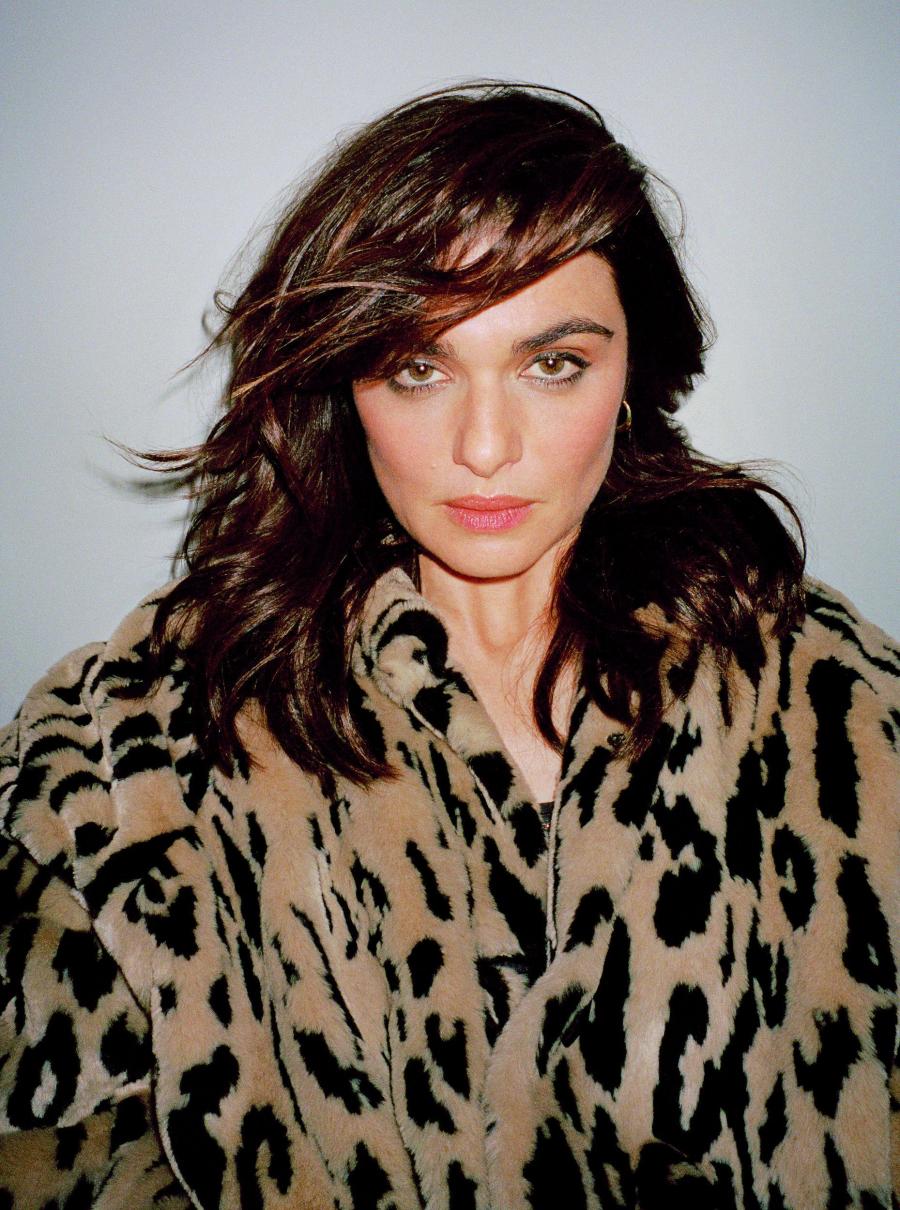
- Photos + Read @ Evening Standard
- Photo Gallery @ Harper’s Bazaar
- Also, See Photo Slideshow at Sidebar
MOVIES
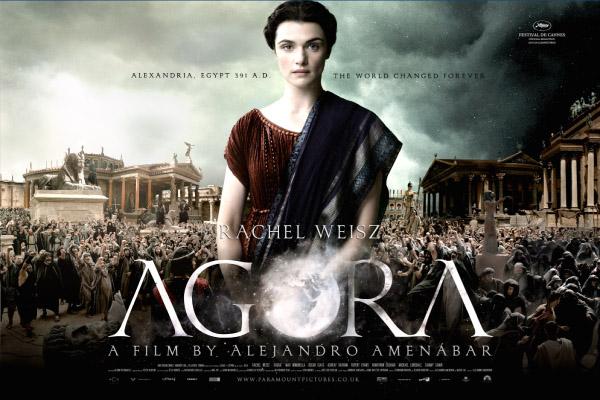
Set in ancient Egypt under Roman rule, AGORA follows the brilliant and beautiful astronomer Hypatia (Weisz) who leads a group of disciples fighting to save the wisdom of the Ancient World, as violent religious upheaval spills into the streets of Alexandria. Among these disciples are two men competing for her heart: the witty, privileged Orestes (Isaac) and Davus (Minghella), Hypatia’s young slave, who is torn between his secret love for her and the freedom he knows can be his if he chooses to join the unstoppable surge of the Christians.
Rachel Weisz on vulnerability, Hollywood power dynamics and longing for London
She’s one of the world’s most in-demand actresses who just happens to be married
to Mr Bond…
By Jane Mulkerrins
A frigid Friday morning in Manhattan’s East Village, and I’m in a tiny Italian coffee
shop awaiting Rachel Weisz…
The studenty, ever-so-slightly grimy locale is not, it must be said, the first place you’d expect to see an A-lister. ‘People who’ve been here a long time say it’s more gentrified, posher, whiter. Fewer drug addicts. But it’s still quite mixed,’ announces Weisz when she arrives, still bundled up in hat and coat. ‘It’s not all white privileged people.’
For 47-year-old Weisz, the ability to remain relatively incognito is a large part of the appeal of living in this neighborhood. Much is always made of her beauty and there’s no denying that, even dressed down in wide-legged jeans and a jumper, make-up free, she is stare-across-the-room striking. But there are no stares today. In fact, nobody seems to notice the Oscar-winner slinking over to my table. In keeping with this inconspicuous demeanor, she seems rather keener on asking questions than answering them. Why am I in New York, she asks, pulling off her gloves. Where am I from in England? How long have I lived here? Do I like it? Will I stay?
In spite of having lived in New York herself for 16 years, her innate Britishness remains intact. She swiftly extols the virtues of the NHS (‘Of course it’s flawed and overstretched and there are immense problems, but it does actually work’), Radio 4 (’I can’t cook without it on, I just freeze up’) and Stormzy (‘I think he’s brilliant. My godson introduced me to him a couple of years ago’). I ask if she could ever see herself living back in London, once her 11-year-old son, Henry — whose father is her former fiancé, the director Darren Aronofsky — has finished school. ‘Yeah, I’d probably go back to the UK,’ she nods. ‘I’m sort of half here and half there anyway. And my last four films have all been made there.’
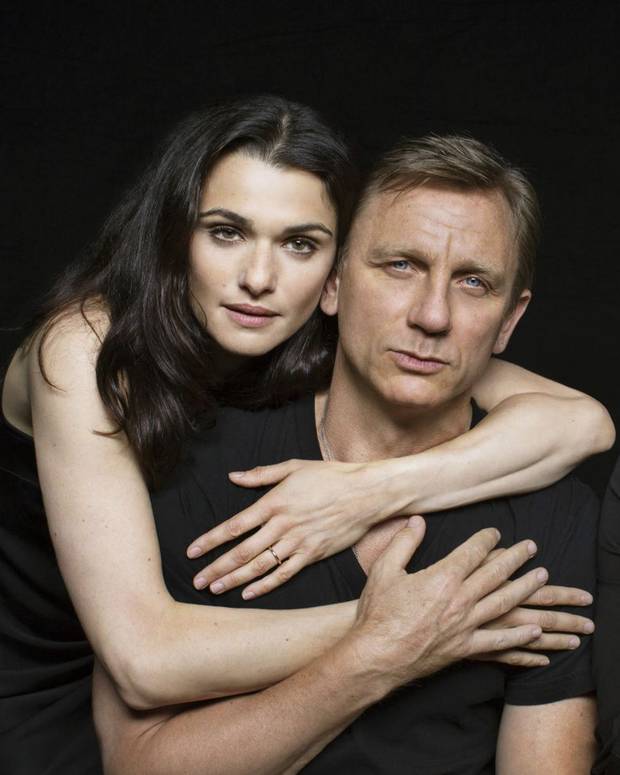
Photo Rachel Weisz with Husband Daniel Craig
The latest of these films is The Mercy, due in cinemas next month, the true story of amateur sailor Donald Crowhurst’s disastrous attempt to sail single-handedly around the world in 1968-69. Colin Firth plays Crowhurst, Weisz his wife, Clare, whom he abandons for over nine months, along with their two children while he sets out to win the race.
Clare’s admirable stoicism, and acceptance of her husband’s rather foolhardy ambition, is what attracted Weisz to the role. ‘She’s extraordinary, not a whingey wife at all. And I found the whole idea that if you really love someone, you’ve got to let them do what they want very moving. She says to her kids that if you love someone, you can’t just love one part of them — you’ve got to love all of them.’
Her tea arrives. ‘I’m not that person,’ she openly admits. ‘I wouldn’t be that stoic. I’m much more vulnerable than she is.’ How would she react, I ask, if her own husband announced he was leaving to traverse the globe for a year? ‘Not well.’ She frowns and shakes her thick thatch of dark hair. ‘Not well at all.’
While he may not be about to set sail solo in a 40-foot yacht, Weisz’s husband is, of course, the ultimate action hero — on screen, at least. She and James Bond himself, Daniel Craig, began dating in December 2010 after they starred together in the film Dream House, and married just six months later. Both are notoriously private about their relationship, with Weisz rarely ever answering questions about her marriage. Has marriage changed her, I ask, somewhat tentatively? ‘I don’t know how to answer that,’ she says, casting her eyes around the room. ‘I mean, I wear a ring all the time. I wear my ring with pride. I’m taken.’
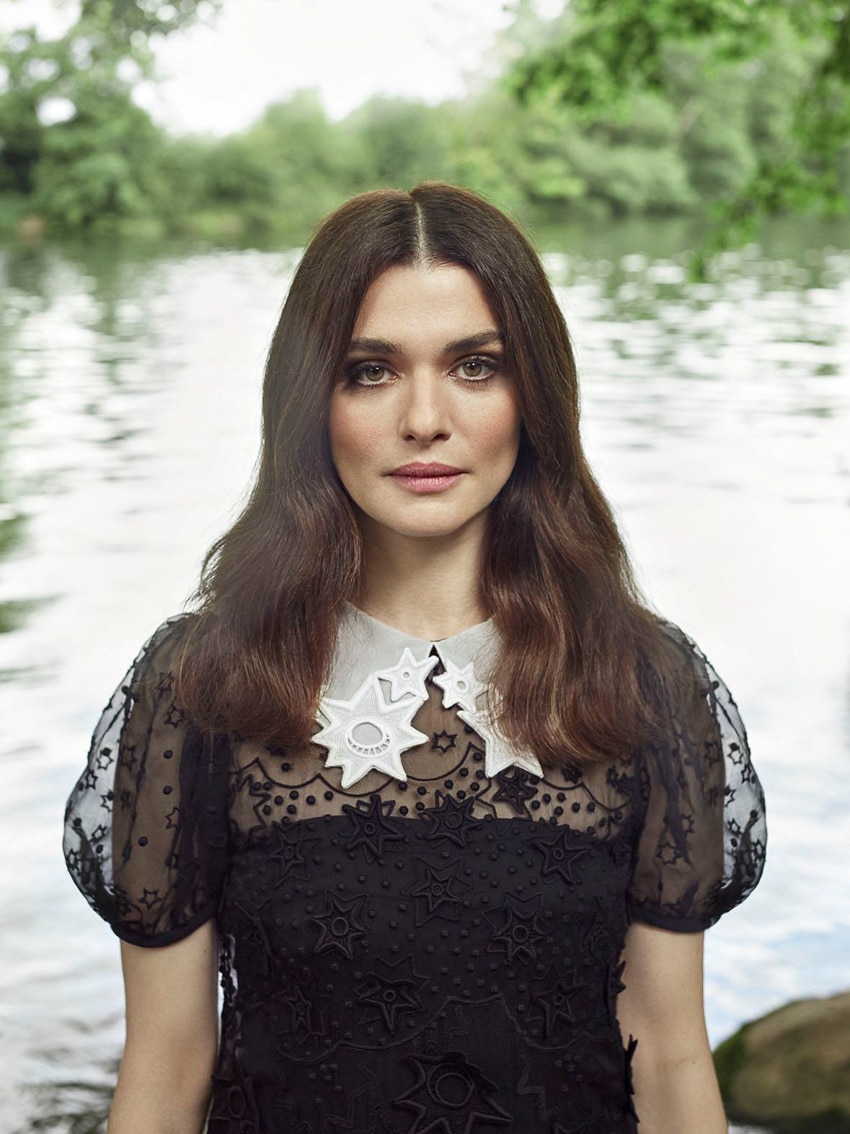
Photo from Harper’s Bazaar Magazine
I try a different tack, asking about marriage as an institution, one she had avoided for decades. ‘You don’t join the institution like it’s the Rotary Club,’ she quips. ‘You make it your own. It’s very personal, it’s very private. I don’t think mine’s particularly exceptional apart from that we’re both in the public eye.’
She pauses. ‘But I never thought I would get married. It was not an ambition of mine. It was the opposite. I couldn’t relate to romantic comedies — marriage seems to be the whole point of them. Then it just happened, happily, at a more mature moment.’
Rachel Weisz grew up in ‘a very liberal Jewish household’ in Hampstead Garden Suburb. Her father, George, who emigrated from Hungary, was a mechanical engineer who also invented things, such as an artificial respirator powered by its own oxygen, while her mother, Edith, was a psychotherapist from Vienna who converted from Catholicism when they married.
As a teenager, she attended a series of ‘posh white girls’ schools’, including Benenden and the North London Collegiate School, the latter of which she was ‘asked to leave’. She did not, she says ‘try to burn it down or anything. I was just not responding to authority in any way’. That changed when she went to St Paul’s Girls’ School for A-Levels, where she found inspiration in her English teacher, Janet Gough. ‘It’s one of those magical teacher stories; she changed the course of my life. Completely. Totally.’
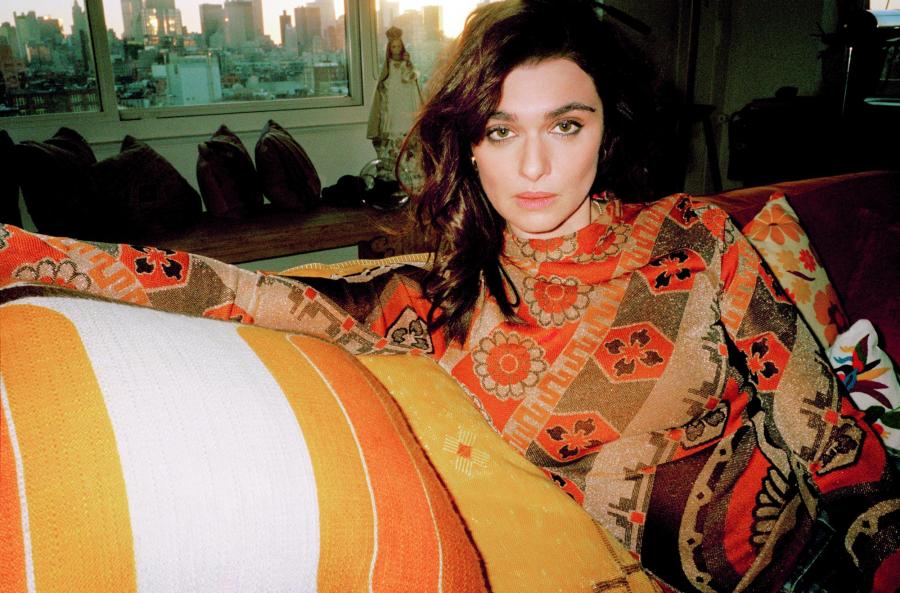
She went on to study at Cambridge where she was famously known as ‘The Trinity Hall Heart Breaker’ and where she began to act, setting up an avant-garde experimental theatre group, which won awards at the Edinburgh Fringe. She made her name with 1999’s surprise hit The Mummy in which she played clumsy librarian Evelyn Carnahan. The Constant Gardener, six years later, won her both acclaim and an Academy Award for Best Supporting Actress.
Somewhat incongruously, given her self-confessed issues with authority, Weisz also worked as a model when she was just 14. ‘I wanted to be very independent, I was trying to earn my own money and, at the time, it seemed quite glamorous, like it would give me access to power or something,’ she shrugs. ‘But you have to be very disciplined — successful models work very, very hard. I was not a good model.’
Henry will soon be a teenager; would she be happy to let him try his hand at modelling, too? ‘Over my dead body,’ she replies, instantly and very firmly. ‘He can do a paper round or something, but not photographs. No. He’s a child.’ Her son’s privacy is of paramount importance to Weisz. ‘I generally don’t talk about him. He didn’t choose to have a mum who’s in the public eye, so I keep him away from my career. He’s also not very interested in it,’ she says, laughing.
Weisz herself spends ‘a lot of time on my non-work life’ too. She is in a book club with other mothers at Henry’s school. ‘And I see a lot of plays, a lot of films, a lot of friends. I cook Sunday lunches, have people over with their kids. People reading this in England will go: “Yeah and?”, so can you please explain the difference?’ she requests. ‘It’s much more formal here. People arrange to meet in a restaurant. There’s less of that thing of just putting a chicken in the oven and the kids running around, and it being a bit more messy and informal.’
Later this year, Weisz will be seen in The Favorite, alongside Olivia Colman and Emma Stone, playing Sarah Churchill, Duchess of Marlborough — the right-hand woman of Colman’s Queen Anne. ‘I’m her best friend, adviser and lover. And I enjoyed all of them,’ declares a beaming Weisz. And, after almost 25 years in front of the camera, she is now stepping behind it, too, developing and producing her own films, the first of which, Disobedience, is due out this spring. ‘It’s just a completely different muscle,’ she says of the producing process. ‘It feels like I play two sports now instead of one: acting and producing, like volleyball and football, and it’s really fulfilling.’ Other high-profile actresses, including Reese Witherspoon, Sandra Bullock, Nicole Kidman and Gemma Arterton, have all made similar moves into producing in recent years, many citing a lack of female-driven stories as well as a dearth of decent roles for women as the impetus.

Disobedience would seem to be the perfect story for Weisz to tell. Based on the novel of the same name by Naomi Alderman (author of The Power), it is the story of a north London rabbi’s lesbian daughter who returns home to her Orthodox community after living in New York. ‘It’s respectful to the details of faith, but it could have been a Muslim community, or a very Christian family,’ notes Weisz, who stars as the central character, Ronit Krushka, alongside Rachel McAdams and Alessandro Nivola. ‘It’s about faith, and sexuality, existential freedom, choosing the family that you want — it asks lots of big old questions.’
Following Disobedience, there is a raft of further productions in various stages of development, too, including the story of Dr James Barry, a 19th-century Scottish woman who lived as a man in order to pursue a career in medicine, and an adaptation of Lissa Evans’ novel Crooked Heart, about an orphan boy evacuated to St Albans during the Blitz, who forms an unlikely criminal alliance with the debt-ridden woman who takes him in. They are all, I note, very British-sounding stories. ‘There’s an American one coming, too,’ Weisz assures me.

Having more women in positions of power behind the camera must be, I posit, one way to help fight the misogyny and abuse about which so many women in Hollywood have begun to speak out in recent months. Weisz, while quick to attest that she has never been a victim of such treatment herself, has seen people close to her speak out. ‘My friend Sophie Dix [the British actress who is one of Harvey Weinstein’s accusers] has been talking about this since the 1990s. [Weinstein allegedly assaulted her in a hotel room at The Savoy when she was 22]. She would tell anyone who would listen her story, for the last 20 years. And no one seemed to care,’ Weisz says. What does she think changed?
‘I think his power was on the wane,’ she shrugs. ‘Same with Bill O’Reilly, same with Charlie Rose [two prominent television news anchors accused of sexual misconduct]. It’s about economics — they weren’t turning over the big bucks any more. That’s not an optimistic thing to say, but this is all about power and money.’
She isn’t without optimism entirely though. ‘Let’s hope there’s some real structural change to come out of this. That women who don’t have huge platforms on Twitter, who are nurses or office workers, feel that they can talk to their bosses if this is happening to them.’
‘The Mercy’ will be released in cinemas February 9
Photographs and styling by Bay Garnett








 Ben Whishaw's Notebook